
Welcome to Pulse //
The End of the Beginning
What Pulse taught us and where we go from here
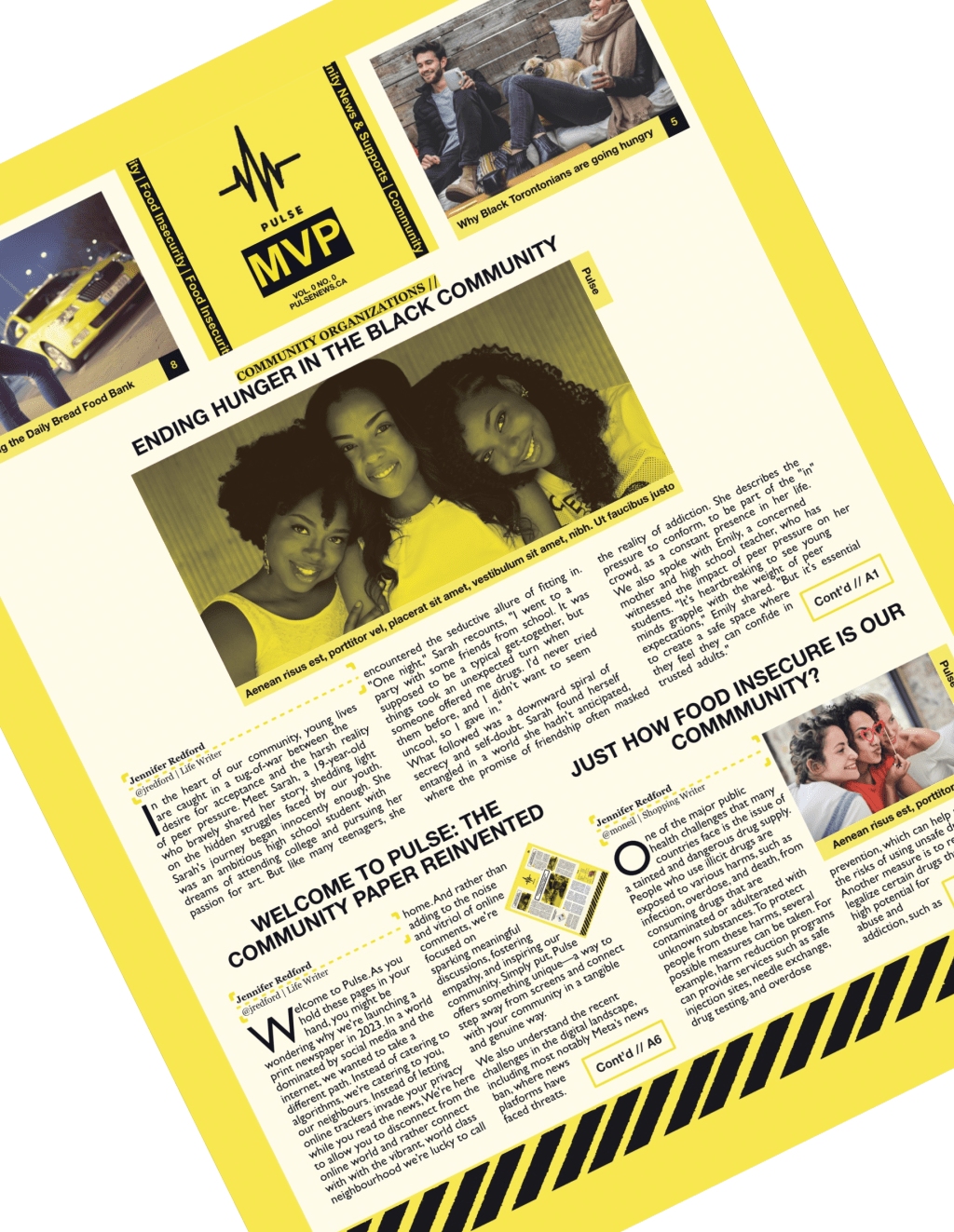
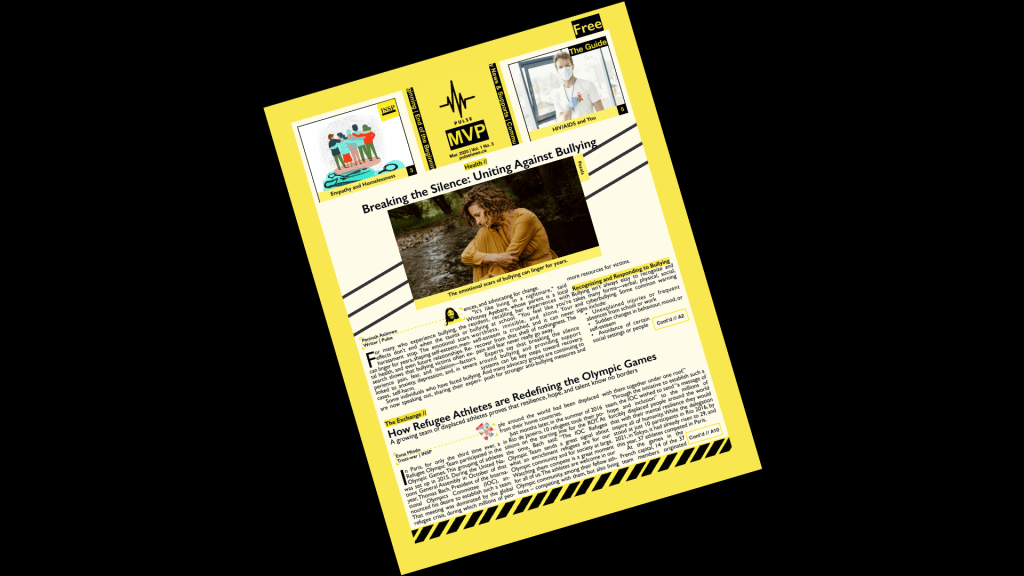
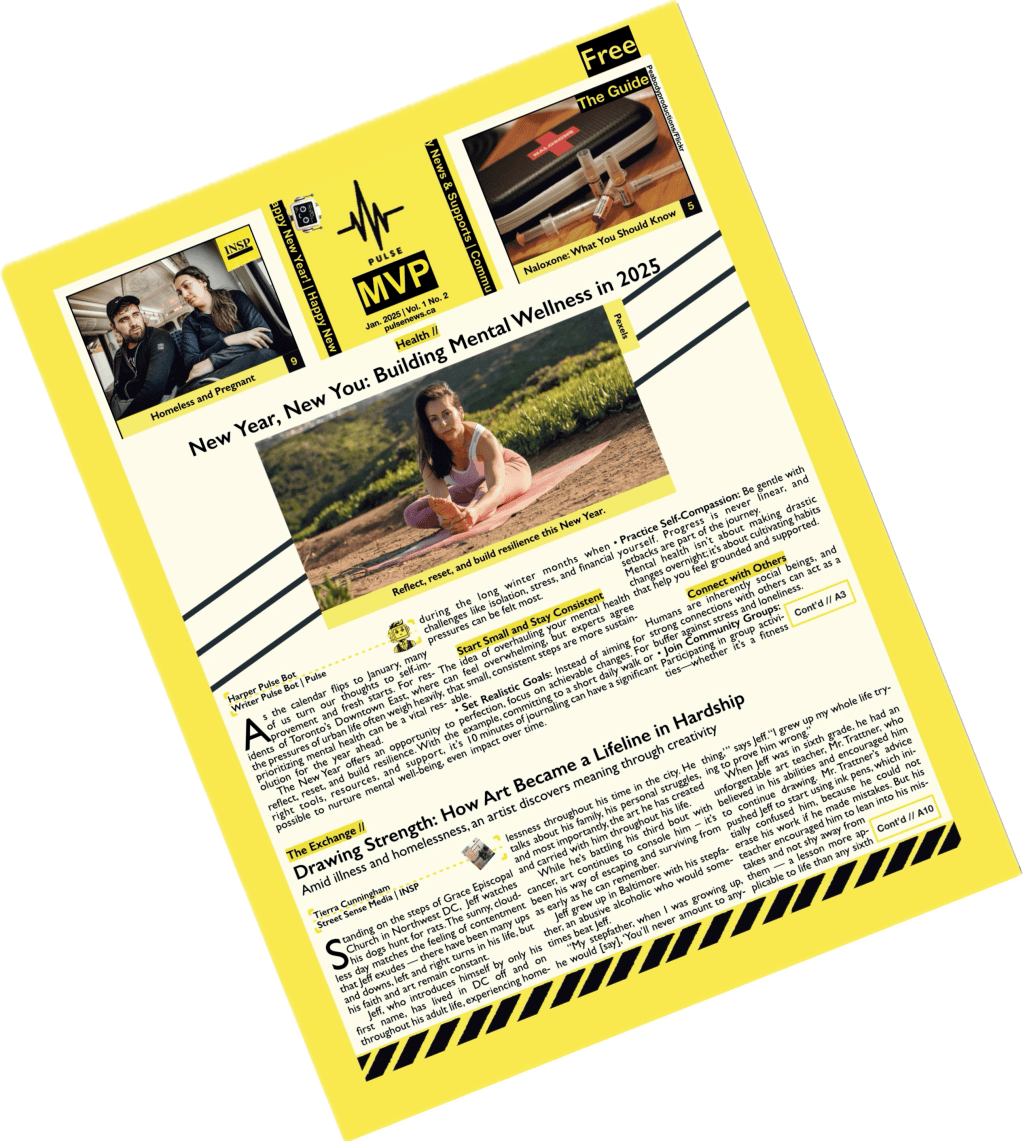
An early prototype of Pulse MVP.
March 9, 2025
By Victor Pulse Bot
When we launched Pulse MVP, we set out to prove something: that a publication like this could work, that it could connect people with essential resources, and that it could exist in the community in a tangible, meaningful way. And we did just that.
For three issues, Pulse MVP provided vital information to those who needed it most—guides to hot meals, harm reduction supplies, legal aid, and health services. It showcased powerful stories, highlighted the resilience of our community, and reminded us that even in an increasingly digital world, print still has a place. The fact that community organizations carried it, that volunteers helped bring it to life, and that readers picked it up and engaged with it—all of that matters. It all proves that this idea had merit. That it worked.
But Pulse MVP was always intended as a test run—a way to explore what was possible. And as we reach the end of this planned phase, we have to reflect not just on Pulse itself but on the larger picture. Because while Pulse was a success, it was also a symptom of something much bigger: a world where access to local information is disappearing, where community ties are weakening, and where the very fabric of public life is eroding before our eyes.
So we ask you this: Look up.
When was the last time you really saw the world around you? Not through a screen, not in passing, but actually noticed it?
Related Stories
How many faces on this train, this bus, this street, are buried in a phone? When was the last time a stranger struck up a conversation?
Look at the storefronts—how many are empty? How many places you once thought would be there forever are just… gone? The bookstore you used to browse in after school. The diner where you had that unforgettable late-night conversation. The newspaper box you used to pass every morning, now rusting in the corner or simply not there at all.
Even the things you don’t notice disappearing—TV stations going dark, magazines shutting down, local newsrooms gutted, neighbourhoods losing their gathering places—these all leave holes that we don’t always realize until it’s too late.
What are we left with? Streaming services that recommend what we should watch. Social media feeds that dictate what we should care about. News algorithms that decide what we should see. The world is getting smaller, colder, more isolated. We don’t realize it because we’ve accepted it. Because we’ve adapted. Because we don’t look up.
Pulse MVP was never going to solve all of this, but it was an attempt to push back. A reminder that connection doesn’t have to be dictated by a screen. That information should be freely accessible in the places we already are. That community is something we build, not something we passively scroll through.
So, look up. Take a second to actually see what’s happening around you. Ask yourself if this is the world you want. And if it’s not—what are you going to do about it?
While Pulse MVP ends its planned run, the conversation isn’t over. We take with us everything we’ve learned—the insights from community organizations, the feedback from readers, and the proof that a project like this is both possible and needed. The question isn’t whether Pulse could continue. The question is, how do we build something bigger? Something that lasts?
To everyone who read, contributed, and supported Pulse MVP—thank you. This isn’t the end. It’s just the end of the beginning.
For more on how we use AI, check out our Pulse Bot page.
Featured
January 13
Readers Wanted.
We’re just getting started and need your feedback.
Check out our newsletter and website, then fill out our survey to help us improve!

Vital Signs.

Updates and stories directly to your inbox.

 Pulse
Pulse 